
8886 Royal Palm Blvd., Coral Springs, FL 33065 954-555-1222
For Physicians & Referring Providers

Hospital-Quality Dental Anesthesia, Without the Hospital

Broward Dental Sedation makes dental treatment less demanding for you and your patients. Our residency-trained anesthesia team delivers advanced anesthesia services in the comfort of the dental office at roughly one-third the cost of a hospital setting, so your medically complex and behaviorally challenging patients can finally get the dental care they need.

Our Mission

Elevating the Standard of Office-Based Anesthesia

Specialty-trained professionals delivering comprehensive relief of anxiety and pain, for patients and their providers.

Anesthesiology in dentistry has been practiced for decades with an excellent safety record, and these services are becoming increasingly important and available. Our group specializes in providing hospital-quality advanced anesthesia services in the dental office at a fraction of hospital cost.

For referring dentists, offering anesthesia services in-office significantly increases scope of practice, treatment plan acceptance, and productivity. Challenging patients can be managed safely and effectively in-house, and they can afford treatment far more easily than in a hospital setting.

A professional relationship with a residency-trained anesthesia provider can transform your practice into an advanced, full-service patient care center.

Anesthesia provider preparing an IV drip in a clinical setting
Clinical Capabilities

Types of Sedation We Provide

Anesthetic technique is selected based on patient factors (health history, physical examination), the oral health services being provided, and procedure length. We work with you and the patient to develop a safe, efficient anesthetic plan for each case. Airway techniques available include endotracheal tubes, laryngeal mask airways (LMAs), nasopharyngeal airways, and protective throat screens.

Moderate / Conscious Sedation

A drug-induced depression of consciousness during which patients respond purposefully to verbal commands, alone or with light tactile stimulation. No airway intervention is required, spontaneous ventilation is adequate, and cardiovascular function is usually maintained. Medications are titrated (dosed incrementally with full knowledge of onset, peak, and duration) to avoid over-sedation.

Deep Sedation

A drug-induced depression of consciousness during which patients cannot be easily aroused but respond purposefully to repeated or painful stimulation. Independent ventilatory function may be impaired; patients may require airway assistance. Cardiovascular function is usually maintained. Providers at this level must be able to rescue patients whose sedation becomes deeper than intended.

General Anesthesia

A drug-induced loss of consciousness during which patients are not arousable, even by painful stimulation. Airway assistance and positive-pressure ventilation are often required. Because sedation and general anesthesia are a continuum, our providers are trained to diagnose and manage the physiologic consequences of deeper-than-intended sedation at every level.

The Day of Surgery

How an Anesthesia Day Works in Your Office

Anesthesia provider seated at the head of a patient with monitoring and anesthesia equipment
  • Setup: 30 minutes before the appointment. Our anesthesiologist arrives and sets up the operatory with required anesthesia equipment. It needs only a small amount of space, with minimal impact on operating and assisting.
  • Pre-operative assessment. Focused physical examination, review of medical history, NPO status, and the anesthetic plan, all completed before treatment begins.
  • Induction & treatment. Once medications are administered, the dental surgeon can begin treatment shortly thereafter, with the anesthesia provider dedicated solely to sedation depth, airway, and vitals.
  • Recovery & discharge. The patient is recovered by the anesthesiologist, in the same treatment chair or a recovery room, and discharged once adequate recovery is demonstrated.
Who Should Refer

Which Patients Are Ideal Candidates for Referral?

Patients whose conditions make conventional dental treatment unsafe, unmanageable, or traumatic are ideal candidates for IV sedation or general anesthesia dentistry. If you treat any of the following, we can help your patients complete comprehensive dental care, often in a single visit.

Developmental & Behavioral Specialists

Developmental pediatricians, behavioral psychologists, ABA providers, child & pediatric psychiatrists

  • Autism spectrum disorder
  • Developmental delay
  • Intellectual disability
  • Sensory issues
  • Dental phobia
  • Behavioral resistance
  • Mood & anxiety disorders

Neurologists & Neuropsychiatrists

Adult & pediatric neurology, neurosurgery, neuropsychiatry

  • Epilepsy & seizures
  • Cerebral palsy
  • Multiple sclerosis
  • Movement disorders
  • Rett syndrome
  • Angelman syndrome
  • Tourette syndrome
  • Brain & spine injuries
  • Neurodegenerative disease

Geneticists, Pediatricians & GI

Clinical geneticists, pediatricians, gastroenterologists, psychologists & psychiatrists

  • Down syndrome
  • Fragile X syndrome
  • Prader–Willi syndrome
  • Williams syndrome
  • Chromosomal disorders
  • Congenital anomalies
  • Severe gag reflex
  • Trauma-related anxiety
  • Psychotic disorders
Fellow dentists: most general dentists don't hold IV sedation licenses and refer out medically complex or behaviorally challenging cases. We welcome dentist-to-dentist sedation referrals: your patient returns to you for ongoing care, every time.
Transparent Economics

Fees, Scheduling & Insurance

Fees

Dental anesthesia typically runs about 1/3 the cost of hospital anesthesia, with no hospital facility fees (which can reach $6,000). Fees depend on surgery duration. A $300 pediatric / $500 adult deposit is collected at scheduling; the balance is due on the day of surgery. All major credit cards and CareCredit (six-month interest-free) accepted.

Cancellation Policy

To protect patient safety, violation of pre-anesthetic instructions, including food or drink less than 9 hours before surgery, may result in cancellation and forfeiture of the non-refundable deposit. Confirmed appointments cancelled, or rescheduled with less than 2 weeks notice, forfeit the deposit; a new deposit confirms the new date. Cancellations are at the anesthesiologist's discretion for safe care.

Insurance

Broward Dental Sedation does not accept insurance; payment for anesthesia is due in full on the day of treatment. Some medical and dental plans reimburse out-of-network; we recommend patients contact their carrier about eligibility. On request we provide an itemized receipt and anesthesia record for direct submission.

Referral Resources

Start Referring in Minutes

Ready to refer a patient, or want printed materials for your waiting room? Download our patient brochure, or contact us for a full professional referral packet including Dr. Panahi's credentials, licensing information, conditions treated, safety protocols, and our consultation process.

Or call us directly at 954-555-1222 and we'll coordinate scheduling, pre-anesthetic instructions, and medical clearance with your office.

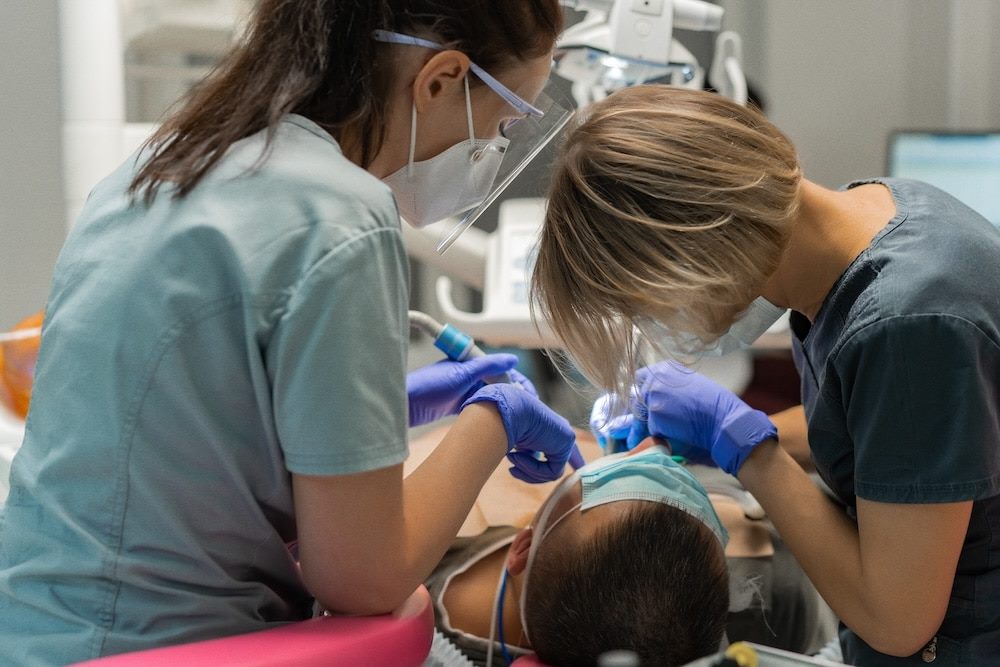
Two clinicians collaborating over a patient during a dental procedure

Your Patients Deserve Dental Care That Works With Their Condition

Partner with a residency-trained anesthesia team trusted by families across South Florida. One call starts the process.